What to Expect From a Canine Orthopedic Surgeon Near You

What to Expect From a Canine Orthopedic Surgeon Near You
When your dog starts limping or shows signs of pain, it can be both worrying and confusing to know what steps to take next. Many pet owners in Orlando and surrounding communities search for a "canine orthopedic surgeon near me" when their companion is struggling with mobility issues. At Crystal Creek Animal Hospital, located at 12110 Crystal Commerce Way, Orlando, FL 32837, our veterinary team is committed to helping you understand the signs of orthopedic problems in dogs, the most common causes, and what to expect if your dog needs advanced orthopedic care. In this guide, we’ll walk through how orthopedic problems present in dogs, why they occur, when surgery might be necessary, and how the entire process works here at our hospital. By understanding the process, you can feel more confident in making decisions for your dog’s health and comfort. If you're concerned about your dog's mobility or are wondering whether they might need to see a canine orthopedic surgeon near me, this article will give you the answers you need and explain how our team at Crystal Creek Animal Hospital can help.
Recognizing the Signs of Orthopedic Problems in Dogs
Understanding when your dog may need orthopedic intervention starts with recognizing the symptoms. Dogs are naturally resilient and may hide pain, so it’s important for owners to pay close attention to changes in movement or behavior. Key signs that your dog might have an orthopedic issue include limping or favoring one leg, difficulty standing up or lying down, reluctance to jump or climb stairs, stiffness after resting, and audible clicking or popping sounds from the joints. You may also notice swelling around a joint, visible deformity, or changes in your dog’s activity level. In some cases, dogs will lick or chew at a painful area, or they may become irritable when touched. These signs can range from subtle to severe, and sometimes may only be noticeable during exercise or play. If your dog displays any of these symptoms, an evaluation by a veterinary team is recommended. Early detection can lead to more effective management and improve your dog’s long-term comfort.
Common Causes of Canine Orthopedic Issues
Orthopedic problems in dogs can arise from a variety of causes, with some breeds being more susceptible than others. The most frequent orthopedic conditions seen in veterinary practice include ligament injuries such as cranial cruciate ligament (CCL) tears, patellar luxation (dislocated kneecap), hip dysplasia, elbow dysplasia, and fractures from trauma. Arthritis, or degenerative joint disease, is also common in aging dogs and can result from chronic wear and tear or previous injuries.
Ligament injuries, like a torn CCL, often occur during high-energy activities such as running, chasing, or sudden changes in direction. Patellar luxation is frequently seen in small breeds and can be either congenital or acquired. Hip dysplasia, a developmental condition, is more common in large or giant breeds and is influenced by genetics, growth rate, and nutrition. Fractures and dislocations typically result from accidents like falls or being struck by a vehicle. Other risk factors that can contribute to orthopedic problems include obesity, improper exercise, and poor nutrition during growth. Understanding the underlying cause helps guide both treatment and prevention, ensuring the best possible outcome for your dog.
What Does a Canine Orthopedic Surgeon Near Me Do?
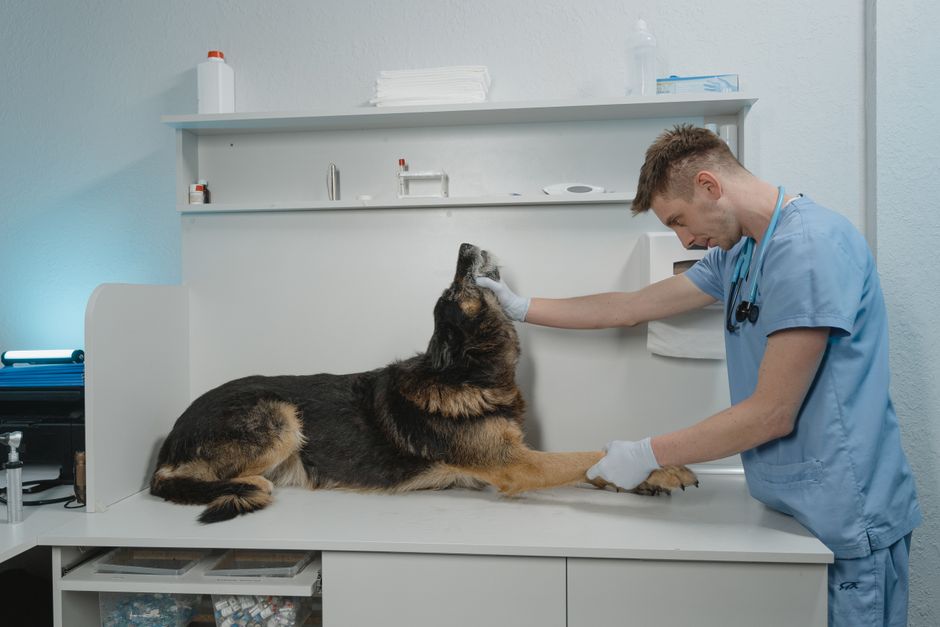
When your primary veterinarian suspects an orthopedic issue, they may recommend an evaluation by a canine orthopedic surgeon. At Crystal Creek Animal Hospital, our veterinary team has advanced training in diagnosing and treating musculoskeletal problems in dogs. The process starts with a thorough orthopedic examination, which includes a detailed history, hands-on assessment, and diagnostic imaging such as X-rays or, in some cases, advanced studies like CT scans. These diagnostics help pinpoint the exact nature and location of the problem, whether it’s a torn ligament, a dislocated kneecap, or a fractured bone.
Once a diagnosis is made, our team will discuss all available treatment options. Not every orthopedic case requires surgery; some can be managed with medication, physical therapy, or lifestyle changes. However, for injuries like a ruptured CCL, severe hip dysplasia, or complex fractures, surgery is often the most effective way to restore mobility and relieve pain. At Crystal Creek Animal Hospital, we offer a comprehensive range of orthopedic procedures, including ACL repair surgery, patellar luxation correction, FHO (Femoral Head Ostectomy) for hip problems, and fracture repair. The goal of each procedure is to return your dog to comfortable, pain-free movement.
The Orthopedic Surgery Process
If surgery is recommended, your dog will first undergo a pre-surgical evaluation to ensure they are healthy enough for anesthesia and to minimize any risks. This includes bloodwork, imaging, and sometimes additional testing based on your dog’s age or medical history. On the day of surgery, your dog will be closely monitored by our veterinary team, who use advanced anesthesia and pain management protocols for safety and comfort. After surgery, your dog will recover in a quiet, supervised environment before going home with a detailed care plan.
Postoperative care is vital for successful recovery from orthopedic surgery. This often involves restricted activity, pain medication, and sometimes physical therapy exercises to rebuild strength and mobility. Our team will provide clear instructions and ongoing support throughout the recovery period, and follow-up visits are scheduled to monitor healing and progress. Many owners are amazed at how quickly their dogs regain mobility and enthusiasm for life after a successful orthopedic procedure.
Prevention and Home Care: Supporting Your Dog’s Orthopedic Health
While some orthopedic problems cannot be prevented, there are steps you can take at home to support your dog’s joint health and lower the risk of injuries. Maintaining a healthy weight is one of the most important factors; extra pounds place additional stress on joints and increase the risk of arthritis and ligament injuries. Providing regular, low-impact exercise helps build strong muscles to support the joints, while avoiding sudden bursts of intense activity can reduce injury risk. For puppies and young dogs, proper nutrition and controlled growth are critical, especially in large breeds that are prone to hip and elbow dysplasia.
At home, ensure your dog has a comfortable place to rest that is easy to get to, and use ramps or steps if your dog has trouble with stairs or getting on furniture. Non-slip rugs can help prevent slips and falls on slick flooring. Routine wellness visits with your veterinarian are essential for early detection of joint problems, and you can learn more about wellness examination services at Crystal Creek Animal Hospital. For dogs with a history of orthopedic problems, ongoing management may include weight monitoring, joint supplements, or specialized therapies like laser treatment or physical rehabilitation. Our team can recommend a tailored plan to keep your dog active and comfortable throughout every stage of life.
When Should You Seek Veterinary Care for Orthopedic Concerns?
Knowing when to contact your veterinarian can make a significant difference in your dog’s recovery and long-term health. Immediate veterinary attention is recommended if your dog is unable to bear weight on a limb, experiences sudden severe lameness, shows signs of significant pain (vocalizing, panting, or restlessness), or if you notice obvious swelling or deformity. For more subtle or chronic signs, such as intermittent limping, stiffness, or changes in activity level, schedule an appointment for a thorough evaluation. Delaying care for orthopedic problems can result in worsening pain, joint damage, or decreased quality of life for your dog.
At Crystal Creek Animal Hospital, we pride ourselves on providing comprehensive orthopedic services for companion animals in Orlando and surrounding communities. Our veterinary team will guide you through every step, from initial evaluation to diagnosis, treatment, and recovery. Whether your dog needs a simple joint assessment or advanced surgical intervention, we have the experience and technology to help.
Why Choose Crystal Creek Animal Hospital When Searching for a Canine Orthopedic Surgeon Near Me?
Choosing the right veterinary team for your dog’s orthopedic needs is essential for a successful outcome. At Crystal Creek Animal Hospital, we combine advanced diagnostics, state-of-the-art surgical techniques, and compassionate care to ensure your dog is in the best hands. Our hospital is equipped to handle a wide range of orthopedic procedures, from fracture repair and dislocation treatment to complex joint surgeries. We understand how much your dog means to you, and we are committed to partnering with you every step of the way, from the first signs of trouble to a full, active recovery.
If you are searching for a "canine orthopedic surgeon near me" you can trust, our veterinary professionals at Crystal Creek Animal Hospital stand ready to help. We encourage you to schedule an appointment if you notice any mobility issues, lameness, or signs of pain in your dog. Our team will answer your questions, provide a thorough assessment, and discuss all available treatment options tailored to your dog’s specific needs. For those in Orlando and neighboring communities looking for a reliable "vet near me," our location at 12110 Crystal Commerce Way, Orlando, FL 32837 is easily accessible and welcoming to all breeds and sizes.
Let us help your dog get back to pain-free living. To schedule your consultation or learn more about our orthopedic services, call us at (407) 203-0741 or visit our website. Your dog’s comfort, mobility, and happiness are our top priorities, and our veterinary team is here to support you every step of the way.